

How Different Protein Sources Digest And Why It Matters for Your Fitness Goals

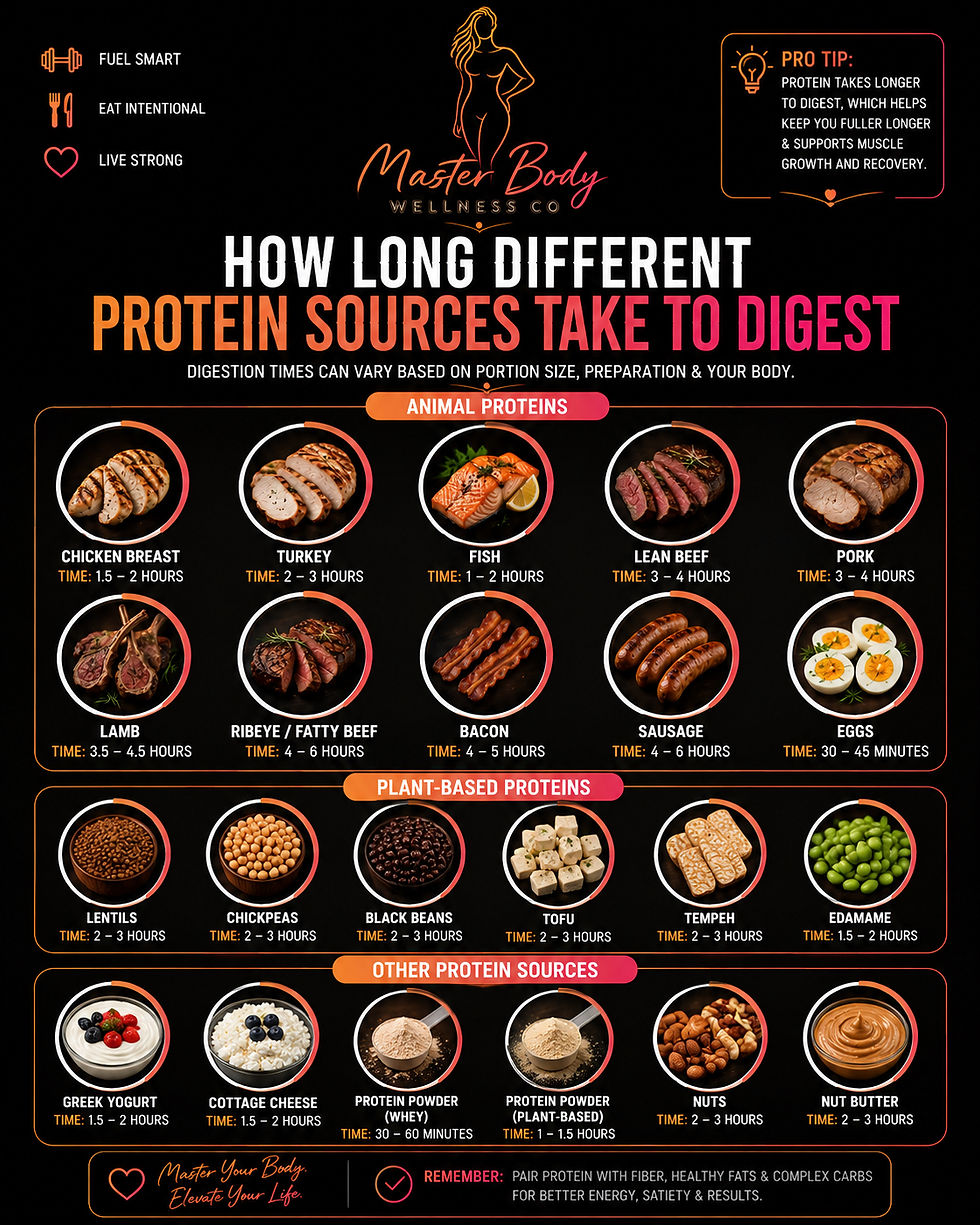
When most people think about protein, they only think about one thing: muscle growth.
But what many women don’t realize is that the type of protein you eat and how your body digests it can impact your:
- energy levels
- fullness
- recovery
- cravings
- body composition
- workout performance
Not all protein sources digest the same way, and that’s not necessarily a bad thing.
Some proteins digest quickly and are great around workouts, while others digest slower and help keep you fuller longer throughout the day.
Let’s break it down.
## What Affects Protein Digestion?
Protein digestion is influenced by:
- portion size
- fat content
- fiber content
- cooking method
- hydration
- gut health
- overall meal composition
This means digestion times are NOT exact for everyone.
A lean grilled fish filet will digest differently than a fatty ribeye steak, and both will digest differently when paired with vegetables, rice, or healthy fats.
That’s why understanding protein digestion can help you make smarter nutrition choices based on your goals.
Faster Digesting Protein Sources
These are often lighter on digestion and may be ideal around workouts or for people who prefer lighter meals.
Fish
Fish is generally one of the easier animal proteins to digest because it tends to be leaner and lower in connective tissue.
Great for:
- post-workout meals
- lighter dinners
- recovery-focused nutrition
Eggs
Eggs provide high-quality protein and are typically easier for many people to digest.
Great for:
- breakfast
- balanced meals
- muscle recovery
Whey Protein
Whey protein is one of the fastest digesting protein sources.
This is why many people use it:
- after workouts
- when protein intake is low
- for convenience
Moderate Digesting Protein Sources
These proteins provide a more balanced digestion rate and work well for everyday meals.
Chicken Breast
Lean chicken is one of the most versatile protein sources because it is filling without being overly heavy.
Great for:
- meal prep
- fat loss phases
- balanced nutrition
Turkey
Turkey is another lean protein option that supports satiety and recovery.
Greek Yogurt & Cottage Cheese
These are excellent high-protein dairy options that can support:
- fullness
- recovery
- healthy snacking habits
---
Slower Digesting Protein Sources
These proteins often contain more fat and can keep you fuller for longer periods of time.
Lean Beef & Steak
Red meat typically digests slower than lean poultry or fish due to:
- higher fat content
- denser protein structure
This slower digestion may help with:
- satiety
- muscle recovery
- longer-lasting fullness
Lamb, Bacon & Sausage
These proteins tend to digest slower because they are often higher in fat and more heavily processed.
That doesn’t mean they are “bad,” but balance matters.
Plant-Based Protein Sources
Plant proteins often digest differently because they also contain fiber.
Lentils, Chickpeas & Beans
These are slower digesting due to their fiber content.
Benefits include:
- fullness
- blood sugar support
- digestive health
Tofu & Tempeh
These are excellent plant-based protein options that provide a moderate digestion rate and can fit well into balanced meal plans.
Why Digestion Speed Matters
Different protein digestion rates can be useful depending on your goals.
Faster Digesting Proteins
May be better:
- around workouts
- after training
- when you need quick fuel
Slower Digesting Proteins
May help:
- reduce cravings
- improve fullness
- support longer satiety between meals
The goal is not to fear foods — it’s to understand how they work inside your body.
My Coaching Philosophy
Inside The Master Body Wellness Company, I teach women how to stop guessing and start understanding their nutrition.
Protein is not just about “eating healthy.”
It’s about:
- fueling your body properly
- supporting recovery
- preserving muscle
- improving energy
- creating sustainable habits
There is no one “perfect” protein source.
The best nutrition plan is the one that fits your lifestyle, goals, digestion, and consistency.
Final Thoughts
Instead of obsessing over exact digestion times, focus on:
- balanced meals
- adequate protein intake
- hydration
- fiber intake
- consistency
Your body thrives on structure, not extremes.
And remember:
The goal isn’t perfection.
The goal is mastery.
— The Master Body Wellness Company


Comments